I still remember the first time my husband and I rolled out two yoga mats side by side on our tiny balcony after a long, stressful week. We were both skeptical—yoga had always been my solo thing—but within minutes of syncing our breath in a simple seated twist, something shifted. Laughter bubbled up, tension melted, and for the first time in ages we felt truly together. That’s the magic of partner yoga. It’s not just another workout; it’s a playful way to build strength, trust, and connection without ever leaving the living room. Whether you’re a couple, best friends, or even roommates looking to bond, these 10 yoga poses for two people deliver real results. No fancy studio required—just open minds, comfortable clothes, and a willingness to laugh at the wobbles.
Why Partner Yoga is a Game-Changer for Couples and Friends
Partner yoga turns your practice into a shared adventure that deepens intimacy faster than any date night ever could. By leaning on each other—literally—you learn to communicate without words, support one another through challenges, and celebrate small victories like finally nailing that boat pose together. Physically, it stretches you deeper than solo practice ever could because your partner’s gentle pressure acts like a built-in prop. Emotionally, it cuts through daily distractions and reminds you why you chose this person in the first place. I’ve seen shy beginners light up after one session, and long-term couples rediscover that spark. It’s accessible, fun, and surprisingly transformative.
Preparing for Your First Partner Yoga Session
Getting started is easier than you think—no prior yoga experience needed. Clear a space big enough for two mats side by side, wear something stretchy, and grab a couple of yoga blocks or straps if you have them (towels work in a pinch). Talk beforehand about any injuries or limitations so you can modify safely. Start with five to ten minutes of gentle warm-ups like neck rolls and shoulder shrugs. The real secret? Keep it light-hearted. My partner and I always set a “no judgment” rule—falling over is part of the fun.
Essential Safety Tips to Keep Your Practice Fun and Injury-Free
Listen to your body and your partner’s cues above all else. Communicate constantly with clear words like “a little more” or “that’s enough.” Never force a stretch or take on more weight than feels comfortable. If something pinches or strains, come out immediately. Beginners should stick to seated poses first before moving to standing or balancing ones. And remember, hydration and a post-practice hug go a long way. With these basics, you’ll avoid tweaks and build confidence fast.
The 10 Yoga Poses You Can Do With Your Partner
These poses progress naturally from gentle seated work to more dynamic standing balances. Each one targets different muscle groups while strengthening your connection. We’ve included easy modifications so anyone can join in.
1. Partner Breathing (Back-to-Back Seated Meditation)
This simple starting pose sets the tone for everything that follows by syncing your breath and calming your nervous systems together. I swear it’s the reason my husband and I now laugh less during arguments—we’ve practiced staying present like this.
How to Do It
Sit back-to-back in a comfortable cross-legged position with spines touching. Close your eyes, rest your hands on your knees, and feel your partner’s breath against your back. Inhale and exhale together for five to ten breaths, letting the shared rhythm deepen.
Key Benefits for Body and Bond
It lowers stress hormones, improves posture awareness, and creates an instant sense of calm connection that carries into the rest of your practice—and your day.
Modifications and Pro Tips
- If cross-legged feels tight, sit on cushions or extend legs straight.
- Place palms on each other’s knees for extra grounding.
- Try it with eyes open and soft smiles if closing them feels vulnerable at first.
2. Seated Spinal Twist
Twists feel magical when shared because your partner’s gentle resistance helps you rotate farther than you could alone. The first time we tried this, we both let out the biggest sighs of relief—tight desks be gone.
How to Do It
Stay back-to-back in easy pose. Inhale to lengthen your spine, then exhale and twist right, placing your left hand on your partner’s right knee while your right hand rests on your left knee. Mirror each other, hold five to eight breaths, and switch sides.
Key Benefits for Body and Bond
It massages digestion, releases spinal tension, and teaches you to move in harmony—literally turning toward each other.
Modifications and Pro Tips
- Keep the twist gentle; use your partner’s back as light support rather than pulling hard.
- Extend one leg if hips feel tight.
- Whisper “inhale” and “exhale” to stay synchronized.
3. Partner Forward Fold
Nothing beats the deep hamstring stretch you get when your partner counters your fold. We do this after long hikes and always feel like we’ve hit reset.
How to Do It
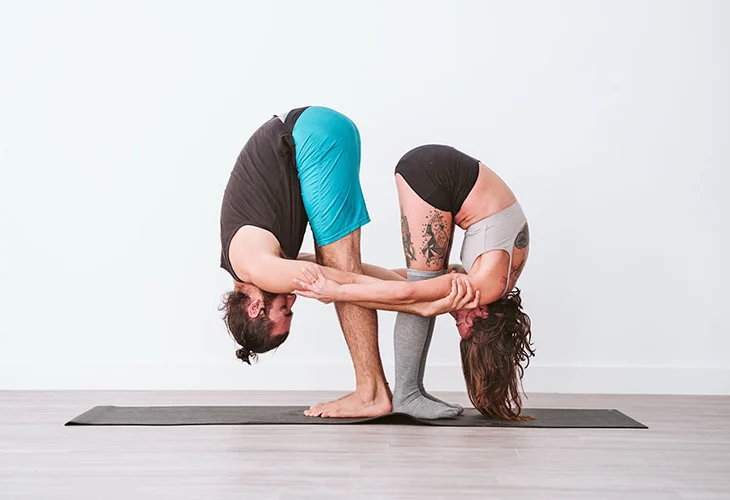
Sit facing each other with legs extended and feet touching. Hold wrists or forearms. One partner folds forward while the other leans back slightly for counterbalance. Hold five to eight breaths, then switch roles.
Key Benefits for Body and Bond
It lengthens the entire back line of the body and builds trust through that gentle pull-and-support dynamic.
Modifications and Pro Tips
- Bend knees softly if hamstrings protest.
- Use a strap between hands for extra reach.
- Keep eye contact—it makes the stretch feel less intense.
4. Double Cat-Cow Stretch
This flowing spinal warm-up is pure joy because you’re literally moving as one. We giggle every single time our timing is off by a second.
How to Do It
Come onto all fours facing each other with about a foot of space between you. Inhale to drop your bellies and lift your gaze (Cow), then exhale to round your spines and tuck your chins (Cat). Flow together for eight to ten breaths.
Key Benefits for Body and Bond
It mobilizes the entire spine, releases back tension, and sharpens your ability to coordinate movement.
Modifications and Pro Tips
- Place blankets under knees for comfort.
- Add smiles or silly faces on the Cow to keep it playful.
- Slow the breath if you get out of sync.
5. Back-to-Back Chair Pose
Legs burn in the best way when you’re literally holding each other up. It’s the ultimate trust exercise disguised as a squat.
How to Do It
Stand back-to-back with feet hip-width apart. Press your backs together and slowly bend your knees to lower into chair pose, keeping thighs parallel to the floor. Hold five to eight breaths while supporting each other evenly.
Key Benefits for Body and Bond
It torches quadriceps and glutes while teaching perfect posture and mutual reliance.
Modifications and Pro Tips
- Hold for fewer breaths if legs fatigue.
- Rise together on an exhale to avoid wobbles.
- Place hands on each other’s shoulders for extra stability.
6. Partner Boat Pose
Core work never felt this fun—or this bonding. The first time we nailed it, we high-fived so hard we almost tipped over.
How to Do It
Sit facing each other with knees bent and toes touching. Hold wrists or hands, press soles of feet together, then lift legs to form a V shape while keeping spines straight. Balance for five to eight breaths.
Key Benefits for Body and Bond
It strengthens the entire core and hip flexors while forcing eye contact and laughter.
Modifications and Pro Tips
- Keep knees bent if straight legs feel impossible.
- Use a strap between hands for support.
- Smile—it prevents tension from creeping in.
7. Double Downward Dog
This inverted partner version stretches everything while building serious upper-body strength. We call it our “reset button” pose.
How to Do It
One partner comes into standard Downward Dog. The second places hands on the mat in front and carefully steps feet onto the first partner’s lower back or hips. Hold five breaths, then switch.
Key Benefits for Body and Bond
It deeply stretches hamstrings and shoulders while teaching clear communication about weight and comfort.
Modifications and Pro Tips
- Keep the base partner’s core engaged.
- Step only toes on if full feet feel too much.
- Communicate constantly—“Ready?” “Too heavy?” “Perfect.”
8. Double Tree Pose
Balancing side by side feels surprisingly intimate. We’ve done this in parks and always draw smiles from passersby.
How to Do It
Stand side-by-side, inside arms around each other’s waists or backs for support. Lift your outside feet to rest on the inside calf or thigh. Press palms together overhead or in prayer at heart center. Hold five to eight breaths, then switch sides.
Key Benefits for Body and Bond
It improves focus, leg strength, and that lovely feeling of leaning on someone you trust.
Modifications and Pro Tips
- Keep toes on the floor for stability.
- Gaze at a fixed point ahead.
- Hug closer if balance wavers.
9. Partner Warrior III
This flying balance pose is pure adrenaline once you trust the hold. My husband still teases me about the time I wobbled right into him.
How to Do It
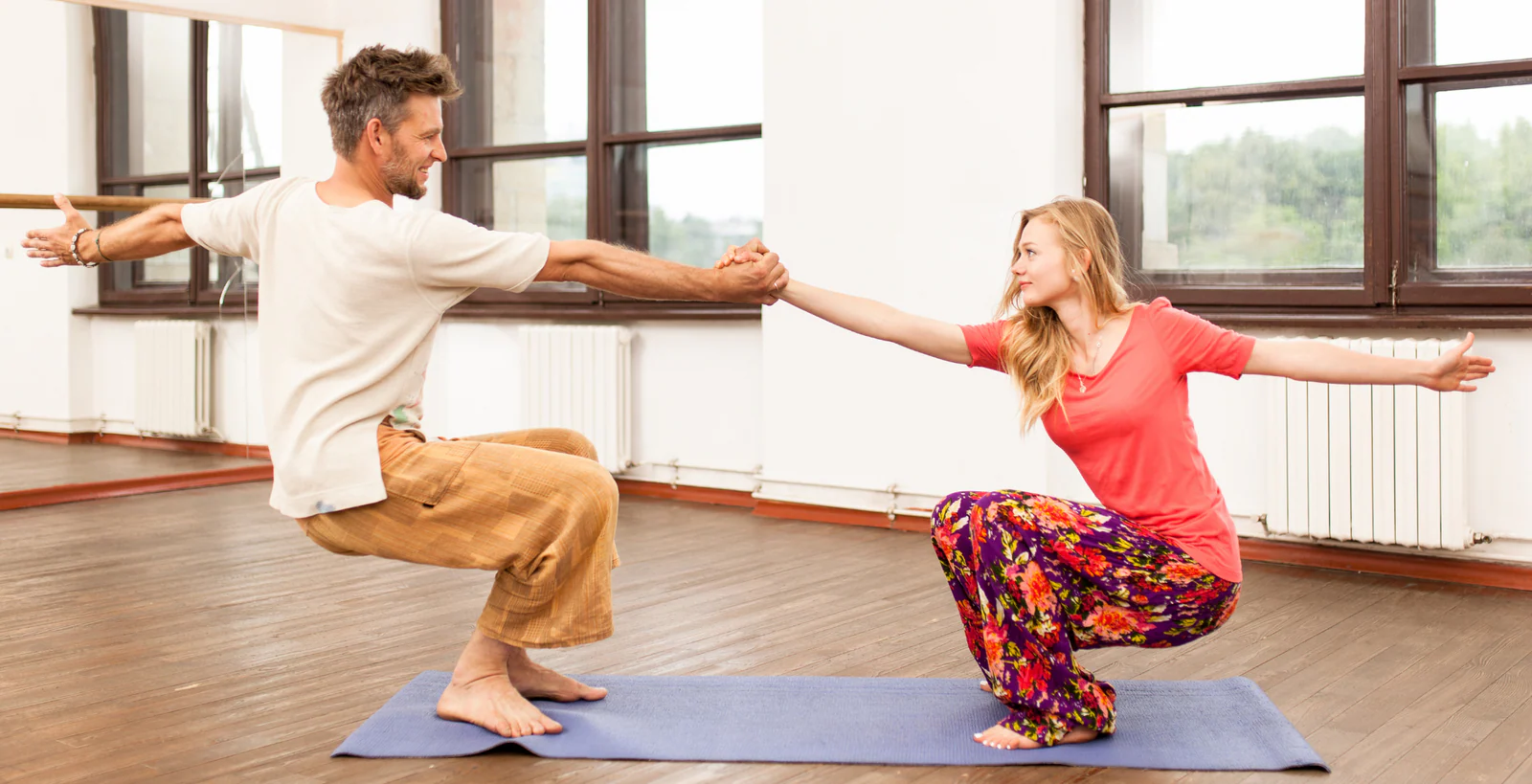
Stand facing each other an arm’s length apart. Hold forearms for support. Hinge forward at the hips, lifting one leg straight back while keeping torso and leg in one line. Hold three to five breaths, then switch legs and partners.
Key Benefits for Body and Bond
It builds incredible lower-body strength, balance, and that exhilarating shared focus.
Modifications and Pro Tips
- Keep the lifted leg lower or bent for beginners.
- Maintain soft eye contact.
- Release slowly to avoid dizziness.
10. Assisted Backbend (Partner Camel Variation)
Ending with a heart-opener feels poetic—literally opening to each other. It’s become our go-to after tough conversations.
How to Do It
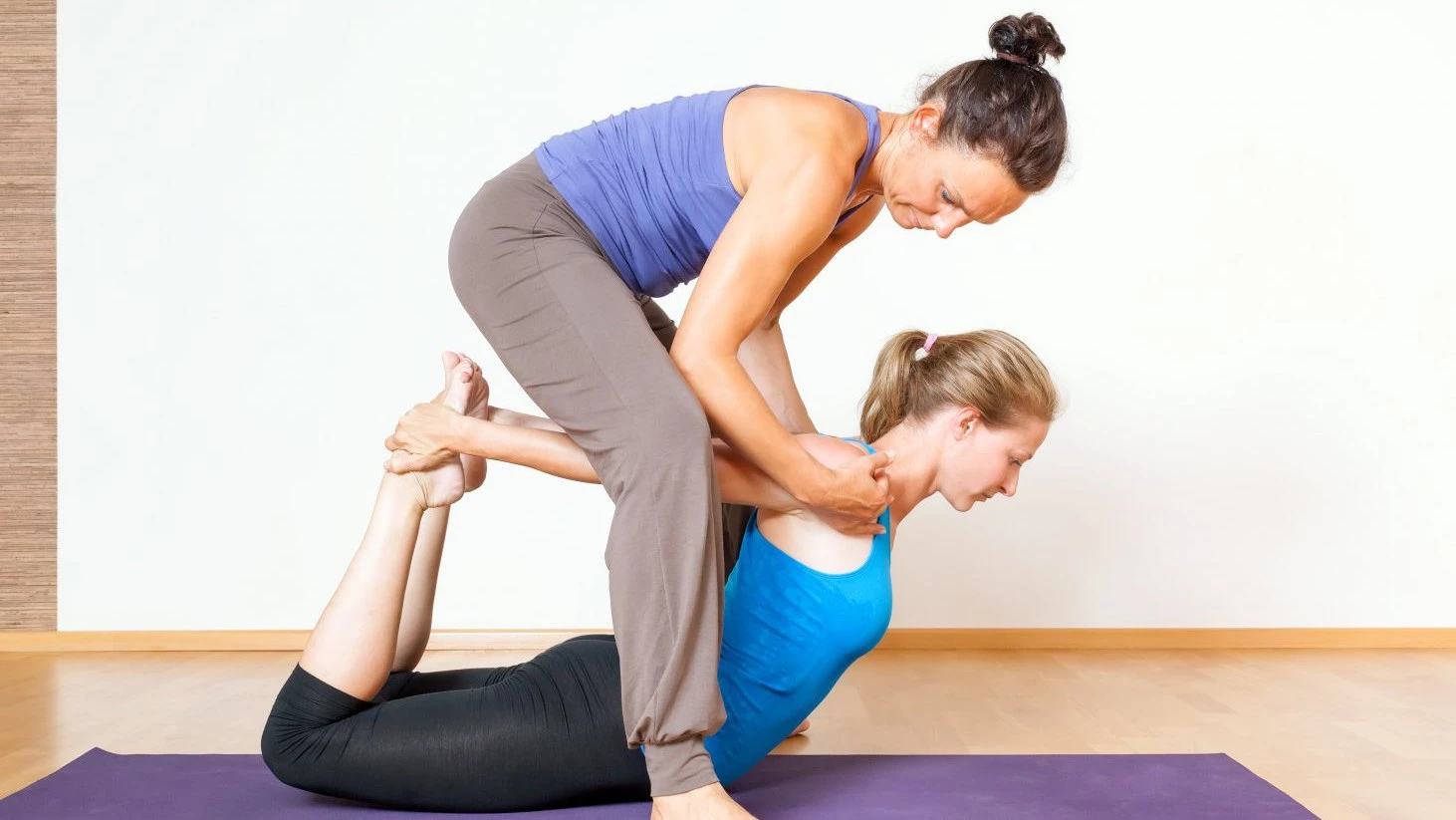
Stand back-to-back and interlock elbows. One partner bends knees slightly while the other leans back, keeping feet planted. The base supports fully; the backbender relaxes into the arch. Hold three to five breaths, then switch.
Key Benefits for Body and Bond
It opens the chest and shoulders while fostering deep trust and emotional release.
Modifications and Pro Tips
- Keep knees soft and communicate pressure.
- Use a wall nearby for extra support if needed.
- Breathe deeply into the heart space.
| Pose | Difficulty | Main Focus | Best For |
|---|---|---|---|
| Partner Breathing | Beginner | Breath & Calm | Stress relief |
| Seated Spinal Twist | Beginner | Spine Mobility | Digestion & posture |
| Partner Forward Fold | Beginner-Intermediate | Hamstrings | Flexibility |
| Double Cat-Cow | Beginner | Spinal Flow | Warm-up |
| Back-to-Back Chair | Intermediate | Legs & Core | Strength |
| Partner Boat | Intermediate | Core Balance | Coordination |
| Double Downward Dog | Intermediate | Full Body Stretch | Inversion practice |
| Double Tree | Intermediate | Balance | Focus |
| Partner Warrior III | Intermediate-Advanced | Balance & Strength | Adventure |
| Assisted Backbend | Intermediate | Heart Opener | Trust & openness |
Pros and Cons of Partner Yoga vs Solo Practice
Pros
- Deeper stretches with built-in support
- Built-in accountability and motivation
- Stronger emotional connection
- More fun and laughter
Cons
- Requires scheduling around two people
- Communication is non-negotiable (which is actually a pro in disguise)
- Some poses need practice to feel safe
People Also Ask: Common Questions About Partner Yoga Poses
Is partner yoga suitable for beginners?
Absolutely. Start with seated poses like breathing and twists, then build up. Modifications make every pose accessible—no yoga experience required.
What are the best partner yoga poses for couples?
The ones above work beautifully, especially Boat and Forward Fold because they encourage eye contact and gentle touch.
How does couples yoga strengthen relationships?
It forces presence, clear communication, and physical trust—skills that translate directly to everyday life together.
Do you need any special equipment for partner yoga?
Just two mats. Blocks, straps, or even towels help with modifications, but they’re optional.
Can partner yoga help with flexibility?
Yes—your partner’s gentle assistance lets you go deeper safely than solo stretching ever could.
FAQ: Your Partner Yoga Questions Answered
How long should a partner yoga session last?
Twenty to forty minutes is perfect for beginners. You’ll feel energized without feeling wiped out.
Can we do these poses if one person is much taller or stronger?
Yes. Height differences actually make some poses more interesting, and strength gaps are easy to modify by adjusting weight distribution.
What if we argue during practice?
Laugh it off. The whole point is learning to stay connected even when things feel awkward or off-balance.
Is partner yoga good for non-romantic relationships?
One hundred percent. Friends, siblings, or parents and adult kids all benefit from the shared movement and trust.
Where can I learn more advanced partner yoga?
Look for local acro-yoga workshops or online classes once these ten feel comfortable. Yoga Journal has excellent free resources too.
These ten poses are more than stretches—they’re invitations to show up for each other in a whole new way. Whether you practice once a week or every Sunday morning, you’ll walk away stronger, closer, and probably laughing. Roll out those mats, breathe together, and see what happens. Your relationship (and your hamstrings) will thank you. Namaste—and have fun.