I still remember the first time I tried AcroYoga. My partner and I were giggling like kids on a playground, trying to balance in a simple plank position while the spotter hovered nearby with a grin. One wobble, a soft thud, and we were on the mat laughing. That moment hooked me. AcroYoga isn’t just yoga with a partner—it’s a playful blend of acrobatics, trust, and deep connection that turns everyday movement into something magical. If you’re curious about stepping into this world, this guide walks you through everything you need to know as a beginner, including a classic sequence that builds strength, balance, and confidence without overwhelming you.
Discovering AcroYoga: More Than Just Partner Yoga
AcroYoga combines traditional yoga poses with acrobatic elements, creating a dynamic practice where one person (the base) supports another (the flyer) while a spotter keeps things safe. It’s not circus-level gymnastics right away; instead, it emphasizes communication, body awareness, and fun. Beginners often discover it feels like playtime for adults—building core strength while fostering real human connection. Unlike solo yoga, every pose requires teamwork, which makes the practice both physically challenging and emotionally rewarding.
The Roots of AcroYoga – A Brief History
AcroYoga traces its origins to the early 2000s when pioneers like Jason Nemer and Jenny Sauer-Klein founded AcroYoga International in 2003, drawing from Jason’s gymnastics background and Jenny’s circus and contact yoga experience. Earlier influences include T. Krishnamacharya’s 1938 L-basing demonstrations and the 1980s work of Benjamin Marantz with AcroSage and Ken Nateshvar Scott’s Contact Yoga. What started as therapeutic partner work evolved into a global movement blending yoga’s mindfulness with acrobatics’ thrill. Today, communities worldwide host jams and classes, keeping the spirit alive through shared play and growth.
Why Beginners Love AcroYoga: Key Benefits
The beauty of AcroYoga for newcomers lies in its holistic payoff—physical gains meet mental and social boosts. You’ll build serious core strength and flexibility while improving balance and posture through partner support. Emotionally, it cultivates trust and clear communication, skills that spill over into daily life. Many beginners report reduced stress and a surprising sense of community after just a few sessions. Plus, it’s downright fun, turning exercise into laughter-filled bonding.
- Physical perks: Stronger core, better posture, enhanced flexibility.
- Mental wins: Increased focus, confidence from overcoming fears.
- Social magic: Deeper connections with partners and spotters.
- Overall vibe: Playful cardio that feels less like work.
Here’s a quick comparison to solo yoga:
| Aspect | Solo Yoga | AcroYoga |
|---|---|---|
| Focus | Individual breath & form | Partner trust & shared movement |
| Strength building | Bodyweight only | Dynamic support adds resistance |
| Emotional element | Self-awareness | Communication & vulnerability |
| Fun factor | Calming routine | Playful and interactive |
Is AcroYoga Safe for Beginners? Safety Essentials
Yes, AcroYoga is safe when approached thoughtfully, but it demands respect for your body and clear boundaries. Always start with a certified instructor and never skip the spotter—especially in your first dozen sessions. Warm up thoroughly, communicate constantly (“more pressure” or “I’m slipping”), and listen to your limits. Common risks like strains or falls drop dramatically with proper form and progression. I’ve seen too many eager beginners rush ahead and tweak a shoulder; slow and steady truly wins here.
Pros of starting safely:
- Builds lifelong body awareness.
- Prevents most injuries through spotting.
- Creates a supportive learning environment.
Cons if ignored:
- Potential for minor strains or bruises.
- Loss of trust if communication breaks down.
- Overwhelm from skipping fundamentals.
Understanding the Roles: Base, Flyer, and Spotter
Every AcroYoga trio has three distinct jobs that keep the practice flowing smoothly. The base stays grounded, using legs and core to lift and support—think of them as the sturdy foundation. The flyer balances on top, engaging their own muscles while surrendering to the lift for that floating sensation. The spotter hovers nearby, ready to catch or guide without interfering unless needed. Beginners often rotate roles to feel each perspective, which builds empathy fast. No one is “better” at any role; it’s all about size, strength, and comfort in the moment.
Getting Ready: Warm-Ups and What to Expect
Before you even touch hands, spend 10–15 minutes warming up with solo sun salutations, cat-cows, and partner planks to wake up your core and shoulders. Expect a mix of giggles, wobbles, and high-fives in class—most studios keep groups small and welcoming. Wear fitted yoga pants or leggings (nothing baggy that could slip) and a snug top; go barefoot or in grippy yoga socks for foot contact. Bring water, a towel for sweat, and an open mind. First classes focus on basics like plank presses, so you’ll leave feeling energized rather than exhausted.
The Classic Beginner Sequence: Step-by-Step Guide
This time-tested sequence, inspired by foundational flows taught worldwide, progresses from ground-based stability to light flying. It’s designed for two people plus a spotter, holding each pose for three breaths. Start on a soft mat in a spacious area. Remember: communicate, breathe together, and keep it light-hearted. I’ve taught this exact progression to dozens of nervous first-timers, and the smiles at the end never get old.
Plank on Plank – Building Core Stability
This opening pose introduces weight-sharing while strengthening everyone’s core. The base holds a strong plank with hands shoulder-width, arms straight. The flyer faces the base’s feet, places hands on ankles, and steps one foot at a time onto the shoulders, stacking shoulders over ankles for balance. Engage your whole body—core tight, legs active. It feels wobbly at first, but that shared tension teaches trust right away. Spotter stands ready by the flyer’s hips.
Plank Press – Learning to Receive Weight
Here the base lies on their back with feet hip-width on the flyer’s hips (arches against hip points). The flyer stands tall, arms in a T, body rigid. The base bends knees to slowly lower and lift the flyer a few inches, building confidence in supporting weight. Flyer relaxes into the feet while keeping core engaged. This drill is pure gold for beginners—it shows the base they can handle load and the flyer they can surrender safely. Keep movements slow and verbal cues flowing.
Base Test – Checking Alignment and Strength
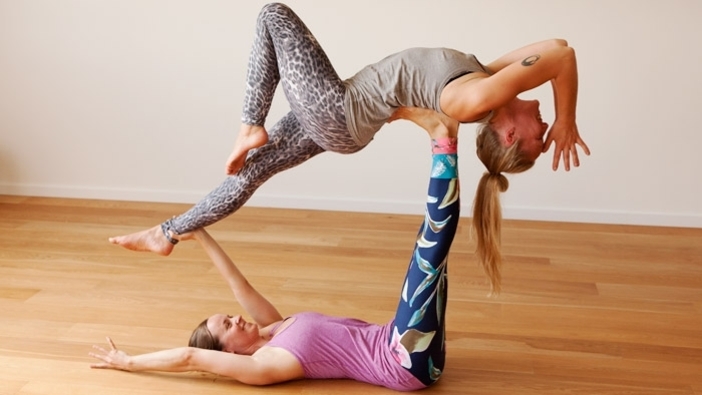
From the lying position, the base stacks feet over hips in an L-shape. The flyer crosses forearms on the base’s feet and presses down to lift legs off the ground. Base straightens legs if possible (or keeps a soft knee bend with a blanket under the pelvis for tight hamstrings). This tests the base’s stability and teaches the flyer to engage fully. Eye contact here seals the trust bond. It’s a small victory that feels huge the first time you float.
Front Plank – Entering the Air
Transitioning from Plank Press, the flyer reaches forward to clasp the base’s hands while pressing feet into the ground to lift off. Base receives with bent legs then straightens into L-shape, stacking feet over hips. Flyer keeps body straight, toes pointed, core on fire. Arms form a vertical line for stability. This is where many beginners first taste “flying”—it’s exhilarating yet grounded. Spotter cues stacking bones vertically.
Front Bird – Letting Go for Real Flight
Once stable in Front Plank, the base presses toes gently into the flyer’s lower belly to help lift the chest. Flyer releases hands and extends arms back like wings. Base keeps hands ready for support. The flyer feels the full freedom of balancing mid-air while the base fine-tunes foot pressure. This pose highlights how tiny adjustments create big stability. Breathe deep—many describe it as a confidence rush.
Bow Pose – The Peak Heart-Opener
In Front Bird, the flyer bends knees to grab ankles (or feet if flexible), lifting into a backbend while keeping core strong. Base points toes more to support the chest lift. Flyer breathes slowly, trusting the hold. This advanced variation in the sequence rewards patience—it opens the heart literally and figuratively. Exit by releasing one limb at a time with clear cues. Celebrate the win together.
Cool-Down and Integration – Sealing the Practice
After the sequence, spend time in partner forward folds or simple back-to-back breathing to integrate the experience. Discuss what felt good or tricky. This reflection turns physical play into lasting growth. Many students tell me this closing ritual is what keeps them coming back.
Common Challenges and How to Overcome Them
Every beginner hits a few bumps—slippery feet from sweat, fear of falling, or mismatched energy with a partner. Combat sweat with a quick towel wipe and grippy socks. Fear fades with consistent spotting and starting small. If communication stalls, pause and reset with a simple “check-in.” I once dropped out of a pose mid-air because I forgot to breathe; now I cue it loudly every time. Progress comes from showing up, not perfection.
People Also Ask: Your Top Questions Answered
Curious minds Google these exact questions before diving in. Here are straightforward answers based on real beginner experiences.
What exactly is AcroYoga?
It’s a partner practice merging yoga poses with acrobatic lifts, focusing on trust, strength, and play.
Is AcroYoga safe for complete beginners?
Absolutely, with a spotter, proper warm-up, and instructor guidance—start slow and communicate.
Do I need yoga experience to try AcroYoga?
No formal experience required, though basic core strength and flexibility help; classes teach fundamentals.
What should I wear to an AcroYoga class?
Fitted, stretchy clothes that won’t slip—think yoga leggings and a snug top, plus bare feet or grippy socks.
Can AcroYoga help with anxiety or stress?
Yes— the trust-building and endorphin rush often reduce stress while boosting confidence and connection.
Where can I find beginner AcroYoga classes near me?
Search local yoga studios, Meetup groups, or official directories at acroyoga.org for jams and intro workshops.
FAQ: Clearing Up Beginner Doubts
How long until I can fly in advanced poses?
Most people feel comfortable flying basics after 4–6 classes; advanced work takes months of consistent practice.
What if I’m not flexible or strong enough?
AcroYoga meets you where you are—modifications and progressions exist for every body type and fitness level.
Do I need my own partner or spotter?
No—classes pair you up and provide spotters; many events are drop-in friendly.
Is AcroYoga better than regular yoga for building strength?
It adds dynamic resistance and balance challenges, often accelerating core and upper-body gains.
Can kids or seniors try AcroYoga?
Yes, with modifications and experienced instructors—focus on fun and safety over intensity.
AcroYoga has a way of sneaking into your life and making ordinary days brighter. Whether you’re seeking stronger abs, deeper friendships, or just a reason to laugh more, this classic sequence gives you a solid, joyful starting point. Grab a friend, find a class, or even practice these basics in your living room with a spotter. The mat is waiting—your first flight might just change how you see yourself and the people around you. Ready to lift off?